




Immunoglobulin E provokes immune reactions of the immediate type. Immediately and up to half an hour after contact with the allergen, symptoms such as swelling, hives, flushing or difficulty breathing occur. In severe cases, IgE reactions lead to anaphylactic shock.
Immunoglobulin G subtype 4 is fundamentally different from immunoglobulin G1, G2 and G3. IgG4 can reduce histamine secretion in an immediate allergic reaction by inhibiting the binding of IgE to the receptor. It is precisely this mechanism that is used in hypo sensitization. The hypo sensitization therapy does not reduce IgE but increases the IgG4 titer. A IgG4 titer equal or higher than IgE leads to immune tolerance. Unlike IgG1-3, IgG4 has only a very weak affinity to complement and effector cells. So, IgG4 itself is much less inflammatory than IgG1-3. Because of its special characteristics, it makes sense to measure IgG4 separately. (In addition to IgG total and IgE! – As explained above the solely determination of IgG4 is not sufficient.)
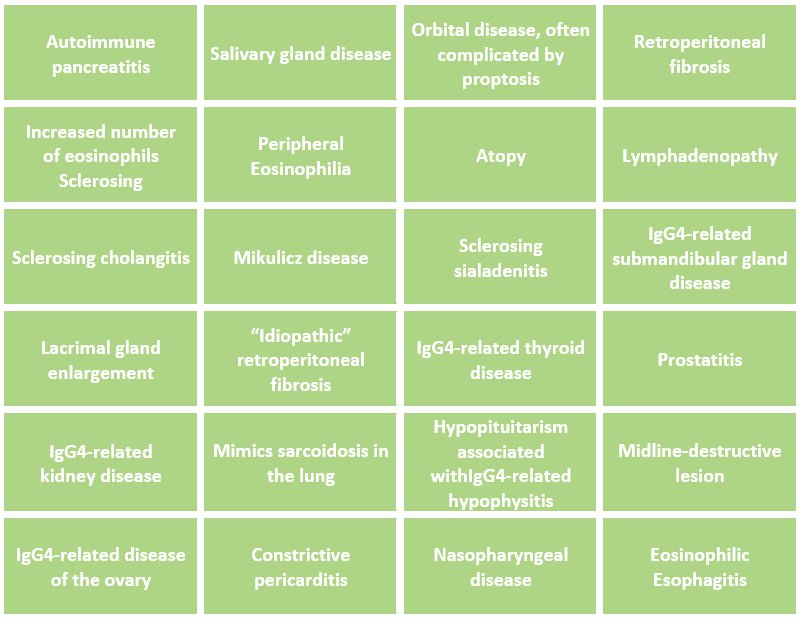
Though IgG4 does not always result in a negative prognosis, with certain conditions, higher levels of IgG4 can be harmful. IgG4-RD (IgG4-related diseases) can affect various tissues, including the esophagus, lymph nodes, and pancreas, as well as hormone-producing tissues such as the thyroid, ovaries and prostate.
Because of its special characteristics, it makes sense to measure IgG4 separately.
Measuring IgG4 and IgE together provides a picture of immune tolerance. Foods for which immune tolerance is detected do not then need to be unnecessarily eliminated from the diet.
In cases of existing IgG4-associated diseases, eliminating IgG4-positive foods can have a beneficial effect.
IgG4-Related Diseases (IgG4-RDs):
Unlike IgE, the symptoms of IgG reactions do not appear until 3 to 72 hours after contact with allergens, making it difficult to identify the foods in question. In addition, the symptoms differ greatly. Food sensitivities are more subtle and range from fatigue to headaches, nausea, seizures, hyperactivity, bloating, diarrhea, constipation, and mood swings. The severity of the symptoms varies from person to person. IgG antibodies have a significantly longer half-life than IgE antibodies. The non-specific symptoms are often not associated with food sensitivities for years or sometimes a lifetime.
Numerous studies show the improvement of symptoms such as irritable bowel syndrome, ADHD, and rheumatoid arthritis when IgG-positive foods are eliminated from the diet over a period of time (depending on the level of the IgG titer).
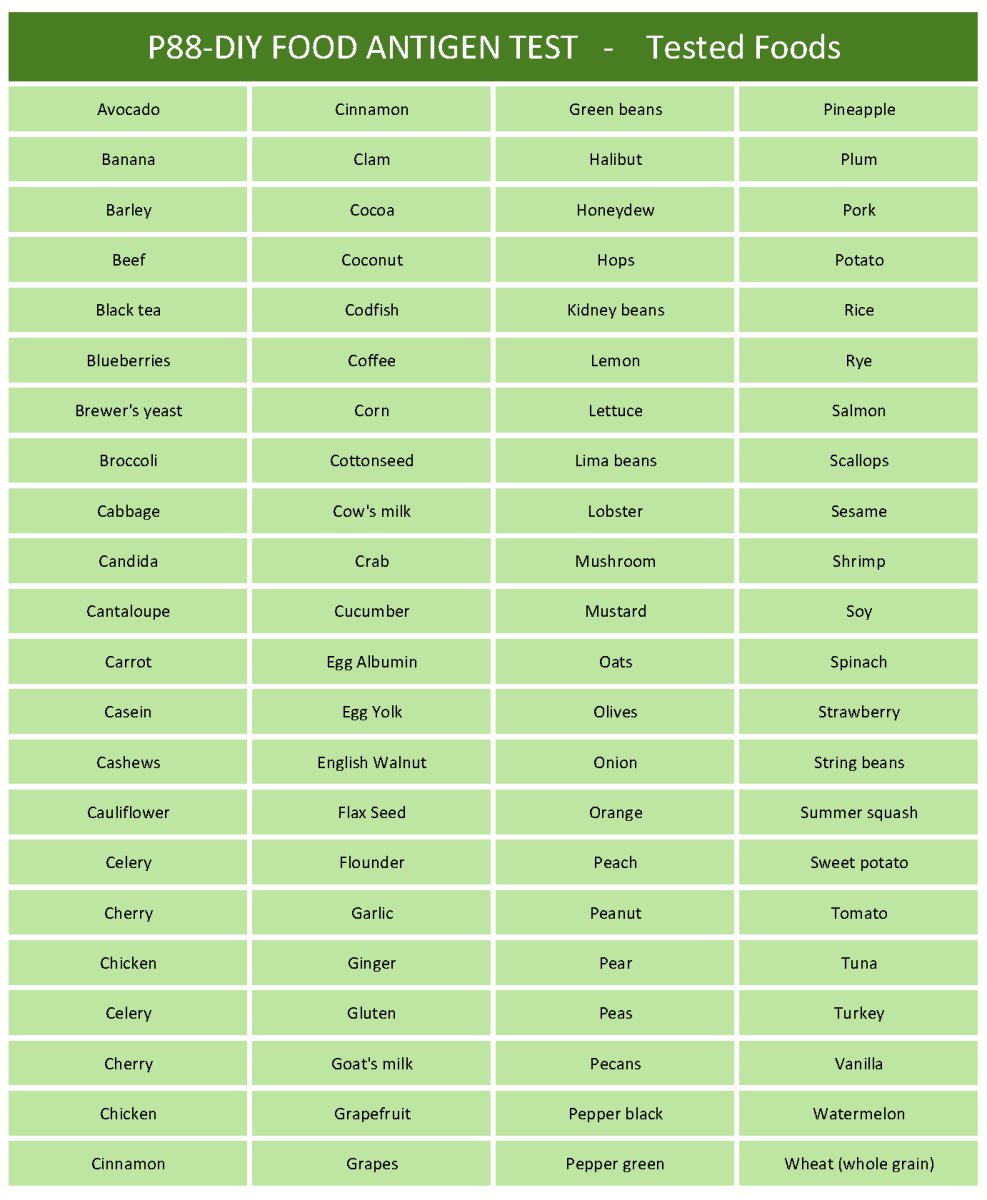
With the P88 DIY food antigen test, IgG-positive foods are reliably detected.
Complement, a plasma protein, is part of the innate immune system. Normally it is activated by microorganisms (such as bacteria, viruses, yeasts, parasites). However, complement activation can also be caused by food allergens. Through complement, an IgG immune reaction can be increased 1000 to 10000 times. A moderate IgG immune reaction to a food with the presence of complement will therefore produce significantly stronger symptoms than a strong IgG immune reaction without the presence of complement. Only if you know both values, it is clear which foods trigger the strongest inflammatory response.
Complement is degraded into different fragments. One of them is C3d, which is stable and easily measurable.
The P88 DAT is the only test that additional to IgG also measures Complement C3d. Tests that only measure IgG may miss the reactions to foods that are most clinically relevant.
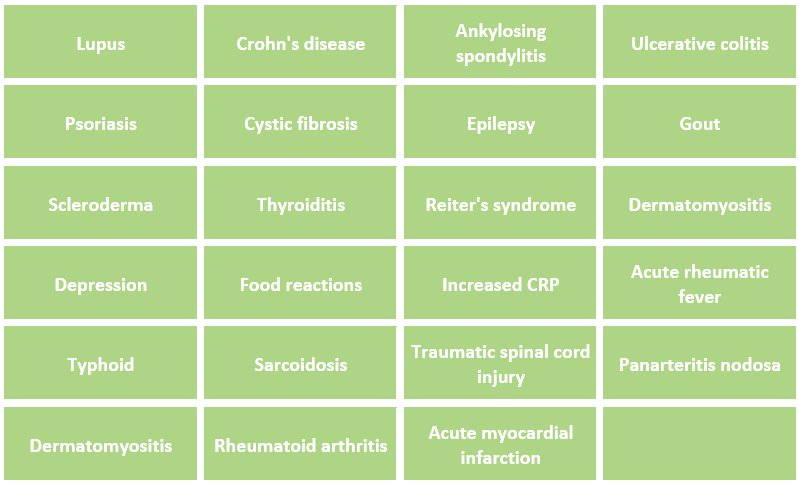
Conditions associated with Complement (C3d):